How Does it Feel to Be a Problem?
In some ways, Moustafa Bayoumi’s How Does it Feel to Be a Problem? Being Young and Arab in America reads like a dystopian novel. There is little drama invented in the prose itself. Bayoumi recounts his subjects’ stories honestly and without literary fluff. Yet, they are heartbreaking and frightening and oddly surreal. The content, at times hardly believable, draws readers into the false allure that this is simply fiction. The characters in the stories may have been given new names, but everything that happens to them is true. They reflect the struggle of being a minority irrevocably entangled in the fear and resentment seething from a nation of millions of people. He entitles his work in reference to W.E.B Dubois famous text for the similarities therein, the unbelievable nature of the struggles of a certain group of people made permissible to the general public by the label broadly applied to that group. Problem.
Bayoumi describes the nature of this entanglement, “Group membership alone, through national origin, religion, or ethnicity, suffices as grounds for broad legal and cultural suspicion…” (266). In the years following the terrorist attacks of 9/11, it has been impossible for Arab Americans to completely distinguish themselves from the image of the “Muslim terrorist”. This has fueled the cultural stereotyping and racism directed at Arabs, as well as the government-lead initiatives to monitor, discriminate against, and imprison them. In his afterword, Bayoumi draws attention to the imperialistic tones evident in “…the current erosion of domestic civil rights in the age of terror…” (268), relating the plight of Arab Americans to that of people suppressed by colonial rule.
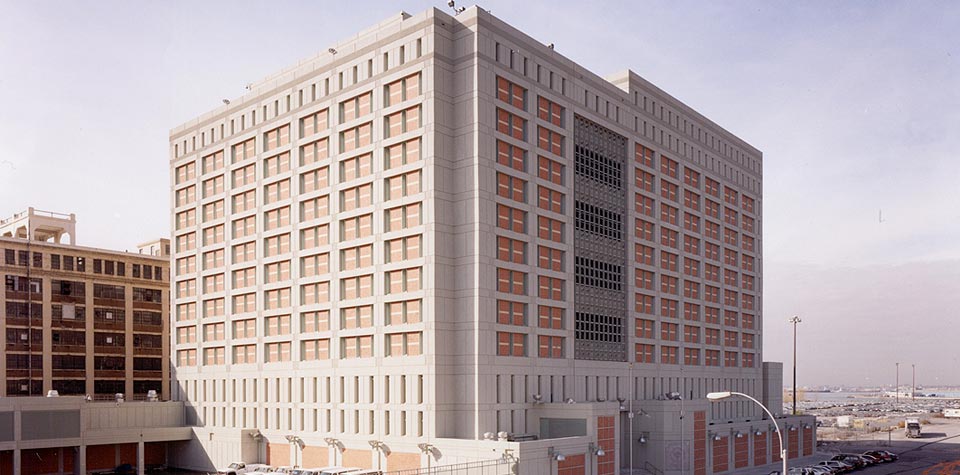 |
| Brooklyn MDC, where Rasha was imprisoned https://www.bop.gov/locations/institutions/bro/ |
Without context, this claim seems exaggerated. So, context is precisely what Bayoumi aims to provide in his book. He opens with a particularly moving anecdote about Rasha and her family. For years they struggle to gain citizenship, stuck in immigration limbo as the children of the family grow up, graduate from high school, and begin college. On the night of their arrest, the children have spent most of their lives on American soil, two of them were born there, protecting them from detainment. The family is promised several days in holding followed by deportation. Instead they are split up and sent to privately owned prisons where they are held for months. Rasha misses most of her semester and, as a consequence, fails her classes. Her advisor tells her that she’ll need proof of her time in prison to fix her transcript.
Her advisor’s reaction encapsulates the experience of Arab American post 9/11. They have been extensively monitored, where even their library book rentals have been catalogued. They have been detained and imprisoned. They have been held at airports and faced unreasonable questioning and searches. They have been unlawfully deported. They have even been the sole targets of a Contingency Plan that would have had them locked up in internment camps resembling those for the Japanese during World War II. And other Americans have been largely blind to all of it. Fear and suspicion are incredibly powerful, especially when they have captured an entire nation. As long as generations of Americans bleed from the aftermath of those terrorists attacks in 2001, generations of Arab Americans will be forced to bleed in solidarity.
Bayoumi, Moustafa. How does it feel to be a problem?: Being young and Arab in America. Penguin, 2009.


Comments
Post a Comment